Okay, I’m not that big on raindrops on roses or whiskers on kittens, or even on The Sound of Music, for that matter, which has never been exactly my favorite musical. Maybe it’s the endless Austrian vistas from the interminable Julie Andrews movie that annoys me. Don’t get me wrong, I love Julie Andrews, and if the movie just consisted of her singing I’d probably like it a lot better. I know they like to “open out” plays and musicals when they turn them into movies, but did they have to open it out to the extent of an extra hour of running time? As for my actual favorite musical, probably Love Never Dies, which is strange, since there isn’t even a part in it I could play.
As I’m completely redoing this website, it seemed to me this would be a good time to redo this page and update the favorites. A lot of the old ones aren’t even available any more. That’s what happens when you let a page go for several years. I’ll try not to do that in the future.
Books
 Run Silent, Run Deep
Edward L. Beach
There’s a review of this elsewhere on the site, so I won’t go into a lot of detail here. This is the classic submarine novel, the one everyone else tries to live up to. The sequels, Dust on the Sea, and Cold is the Sea, are also well worth reading.
 Sea of Shadows
Jeff Edwards
I’ve liked this story ever since Jeff sent me a review copy when it first came out. It was called Torpedo back then. Jeff is an excellent techno-thriller and naval writer, which make sense, as the guy is a retired chief petty officer who used to hunt submarines for a living. There’s plenty of action in this, and there are plenty of those little moments where you think, “That probably really happened.” There’s even something that a lot of “experts” were saying couldn’t happen when the book first came out, and six months later it turns out someone actually figured out how to do it.
 The Old Man and the Sea
Ernest Hemingway
Hemingway won the Nobel Prize for literature in 1954, largely as a result of this novella. The story of an old Cuban fisherman, who daily rows his fragile skiff out into the Gulf Stream in pursuit of the big fish that give him his living, but has caught nothing for the last 84 days, may be seen as an allegory for life itself. We all have our goals, our needs, and there are times when we overcome all obstacles just to attain them.
Yet, having attained them, do we get to keep them?
Hemingway’s simple, straightforward prose style often concealed a remarkable philosophical depth. True, he could sometimes find himself so enthralled with his subject that he’d get carried away and not know when to stop, as he once did in a seemingly endless magazine article on bull fighting. But there is none of that in this book. The narrative unfolds in a clear, easy to comprehend manner. The story itself is timeless, touching on themes which affect all our lives.
Some recent Amazon reviews, probably written by high school students, fault the book for a lack of action. I can only presume these are people who have never fished. Someone once said that fishing is life, and I certainly wouldn’t disagree. This is, quite simply, one of the best works of fiction ever written.
 A Prayer for the Ship
Douglas Reeman
Douglas Reeman is one of the most prolific British naval adventure novelists, as well as one of the best. This was his first novel, and one of the most personal. Motor Torpedo Boats—the British Coastal Forces vessels that inspired the American PT Boats—were small, fragile, and packed a mean punch for their size. The novel is centered around Clive Royce, first seen as a newly-minted sub lieutenant, as he advances personally and professionally in Coastal Forces. Personally, I think you should read all of Reeman’s books, and this is a good place to start.
Using the pen name Alexander Kent, Reeman also writes the Richard Bolitho series, which take their hero from his days as a raw midshipman, through the American Revolution, and into the Napoleonic Wars.
Video
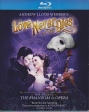 Love Never Dies
(Melbourne Production)
Love Never Dies takes place ten years after the events in The Phantom of the Opera. It took Andrew Lloyd Webber a bit longer than that to get this musical to London’s West End, where it had a respectable run, but the critics all seemed to think it wasn’t quite what it should be, and the Broadway transfer kept being postponed. A London Cast Album is available, and well worth a listen, if only because it will make the changes that turned a good musical into an outstanding one clearer.
The video is of the Melbourne, Australia production, with Ben Lewis as the Phantom, and Anna O’Byrne as Christine. (Full review here.) Changes were made in the sets, some songs were moved around, the opening was revamped, and there were changes in how some things happened. Yes, like The Phantom of the Opera, Love Never Dies is still melodrama, but it may also, with these changes, be the best thing Andrew Lloyd Webber ever wrote.
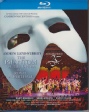 The Phantom of the Opera at the Royal Albert Hall
(London 25th Anniversary Presentation)
This gala 25th anniversary presentation of The Phantom of the Opera at London’s Royal Albert Hall features Ramin Karimloo as the Phantom, and Sierra Boggess as Christine. (Full review here.) While the concert hall venue imposes limitations on just what can be done, this is still a fully staged version, and not the semi-staged, standing at on-stage microphones type presentation you might expect. It stands in delightful contrast to the beautifully photographed, but more often than not terribly sung, Joel Schumacher film version. If you have a choice between the two, get this one.
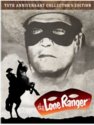 The Lone Ranger: 75th Anniversary-Seasons 1 & 2
I grew up watching The Lone Ranger on our old black & white television and still enjoy these old shows when I have the chance. There are actually a lot of programs in this set, seasons being longer back then, and there are some very short first season episodes that were originally played two at a time. Sponsors had a lot more power in early TV.
The 75th Anniversary title, by the way, refers to the original radio program, which debuted in 1933 (this set was released in 2008). The TV show debuted in 1949 and turns 65 this year.
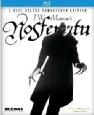 Nosferatu
Murnau’s version of Dracula, starring German actor Max Schreck as the Dracula stand-in Count Orlok, is a classic film that very nearly disappeared completely. Murnau never licensed the novel, and Bram Stoker’s widow sued and won. A provision of the settlement was that all negatives and prints would be destroyed. Fortunately, distribution prints survived in private collections. Even more fortunately, Kino did their usual superb job of finding, and restoring those old prints, so that what you get here is the sharp, beautifully photographed film that would have been presented at the German premier. Kino even went to the considerable trouble of reconstructing Hans Erdmann’s original score. There are many, many videos of this film, but this is unquestionably the best of them. A bit of trivia: This film is the origin of the convention that vampires are vulnerable to sunlight. Previously they weren’t, which is why Polidori’s Lord Ruthven (The Vampyre), LeFanu’s Carmilla (Carmilla), and even Stoker’s Count Dracula (Dracula) are all depicted in their origin stories or novels as wandering around in daytime with impunity.
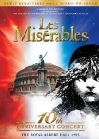 Les Misérables
10th Anniversary Concert
The 10th Anniversary concert version of Les Misérables, performed at the Royal Albert Hall in London, is as close as you’re going to get to a video of the original production. Colm Wilkinson, Alun Armstrong, and Michael Ball (Valjean, Thénardier, and Marius) repeat their roles from the original West End production. Judy Kuhn and Michael Maguire (Cossette and Enjolras) created those roles in the original Broadway version. Jenny Galloway (Madame Thénardier) is original to this concert, but would go on to do the same part in the 2006 Broadway revival, and in the 25th Anniversary concert. Lea Salonga, playing Eponine here, also appears in the 25th Anniversary concert as Fantine.
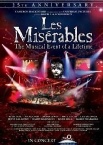 Les Misérables
25th Anniversary Concert
Okay, I admit it, I love both of these. The 25th anniversary concert version of Les Misérables, performed at the O2 Arena, is semi-staged. For the most part the performers stand at microphones downstage. In this version, Alfie Boe plays Valjean, Norm Lewis plays Javert, and Lea Salonga does Fantine. Ramin Karimloo, who will play Valjean in the 2014 Broadway revival, is Enjolras, and Samantha Barks is Eponine, a role she’ll likely be permanently connected with after the movie. This concert does, of course, have Nick Jonas playing Marius, but presumably they wanted someone to attract the teenagers.
Stuff
 Sony Xperia Z Tablet
Being honest, what I actually have is the “S” version that preceded this, but the “Z” is the current model, available in 16 and 32 GB versions. I’m not an Apple sort of guy. My first smartphone was one of the original Samsung Windows phones. After that I had a couple different Palms, and for the last few years it’s been Android. The Sony tablets are Android based, and this one comes loaded with Android 4.2.2 (Jelly Bean). I carry mine around and get a lot of use out of it. Admittedly, for writing I still prefer to use a PC, or even a pen, but that’s a speed issue. I can type a lot faster using all of my fingers than I can using my thumbs. On the other hand, these are great if you want to watch a movie, or read a book, or do anything where a high quality color display is needed. I have the Kindle app loaded on mine and read books on it during lunch at work. It’s particularly good for reading Kindle magazines, and the “Z” has a larger, 10.1” screen, which should be even better.
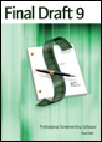 Final Draft 9
When it comes to formatting, script writing is a pain in the ass. Stage plays use one format, screenplays use a different format that seems almost a mirror reversal of a stage script (in a play script dialogue is full width and directions are part width, in a screenplay it’s the opposite). If a speech spans more than one page there are particular conventions on how to show this. Television scripts are different from stage and film scripts, and radio scripts are even more different. And if you need to add a line to a completed scene early in the play, well, with ordinary word processing software that means you’ll have to go through the entire script and move stuff around to accommodate the change. That’s where dedicated script writing software like Final Draft comes in. It comes loaded with the basic formats for plays, films, television, sit-coms, and even BBC specific formats. It takes care of everything if you need to add a line, or remove one. It will even generate a pdf of the script once you’re done.
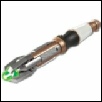 Eleventh Doctor’s Sonic Screwdriver
As replica props go, this is a fairly nice one. It’s a large prop, but so was the one used on the show, a detail David Tennant commented on in The Name of the Doctor. Pushing a button on the handle causes it to extend, again just like the real prop. This one, perhaps unexpectedly, is plastic, but it looks pretty good, and makes two different (alternating) sonic screwdriver sounds. There’s a second, concealed light/sound button on the end for operating the extended screwdriver. If you have slender enough fingers, though, you can reach the tiny button on the battery case between the rails.
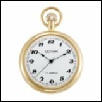 Gotham 17 Jewel Mechanical Pocket Watch
I’ve been carrying one of these for a while now and it actually seems to be getting more accurate as it wears in. When I first got it, it would lose about 30 seconds a day. Hardly railroad accuracy—railroad watches had to accurate to within 30 seconds a week—but not that bad for a relatively inexpensive pocket watch with a mechanical movement. After a few months it’s actually getting closer to that railroad standard. This is not, obviously, a real railroad watch. Those are no longer made. But it has a similar look, with the Arabic numeral dial, and the right size. A real railroad watch wouldn’t have a sweep second hand (which might be confused with the minute hand if you looked too quickly), and would be lever set. If someone wants to do something really nice for me, I’d love to get a restored Hamilton 992 in a nice gold case. Maybe something from this gentleman.
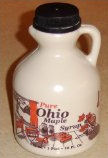 Ohio Maple Syrup
Vermont likes to hog the credit, but the best maple syrup has always been made in Ohio. When I was a kid I spent a good bit of time in the late winter and early spring on my uncle’s farm, helping with the sugaring. He was modern enough that he used heavy plastic collection bags on the maple trees, but never got really fancy with plastic piping from the trees to a central collection point. Probably because the maple trees on his farm grew there naturally, instead of being planted in a grove, so you’d be wandering all over the woods collecting sap and dumping the bags into a big vat he towed around behind an old Allis-Chalmers tractor. You wanted cold nights and warm days, which kept the sap flowing. Once it started staying warm overnight you were done for the year. Back in the sugar house a wood fired evaporator was kept busy turning the sap in syrup. It takes about 45 gallons of sap to make a gallon of maple syrup. What maple syrup is, really, is just pure maple sap with most of the water evaporated out of it. If you continue heating it until nearly all the water is gone you end up with maple sugar. The 45/1 ratio of sap to syrup is why the stuff is so expensive. There’s a lot of work involved. After forty odd years since they sold the farm, my uncle’s old sugar house and equipment may, or may not, still be there. You can get a similar feel for it, without all the labor, by visiting any of the several northern Ohio towns that have maple sugar festivals every spring.
 Beef Jerky
Being a guy and all, I eat this stuff. I know some people who suggest jerky is a very expensive way to buy meat, but when you consider that a pound of beef jerky is actually made from between two and three pounds of fresh meat the price seems a little more reasonable. I’m not going to feel guilty about enjoying this stuff, either. People are omnivores, and a vegetarian diet is actually rather unnatural. If we were natural vegetarians, like, say, gorillas, then you’d expect us to have big guts like gorillas as well. Pure herbivores need much longer intestines to get all the nutrition of out the plants they eat. Pure carnivores, like dogs and cats, have relatively short intestinal tracts. Old, putrid meat doesn’t get stuck in your intestines, either. Anyone who claims it does is probably trying to sell some worthless “cleanse.” Whatever you put in your mouth is going to be processed and the remnant ejected from the other end in about two days, so you don’t need anything but time to “clean you out.”
 Bow Ties
Bow ties were cool long before Matt Smith became the eleventh Doctor. They’re also nowhere near as difficult to tie as many men seem to think, though the suggestion that “it’s just like tying your shoe” isn’t quite right, either. You might want to exercise a little caution with the striped bow ties found at this link, as the stripes start at the left and go up, instead of down, which is the usual pattern for American striped ties. As a consequence, you might sometimes encounter some Englishman who wants to know when you attended his old school, or served with his old regiment, and you’ll have no idea what he’s talking about. If that sort of thing makes you nervous, look for a design with the stripes doing the other direction, or just get a different pattern. Polka dots are nice, and brocades not only look nice, but tend to be stiffer and make particularly nice bows.


